
Fliff has entered the real-money daily fantasy sports market with a new product called Fliff Superstars. The company, previously known for its sweepstakes sportsbook, made this move as state regulators increase their focus on sweepstakes gaming and fantasy sports across the country.
The new platform lets you pick two or more athletes and predict whether they will go over or under specific statistical projections. You can join Max Play or Flex Play contests that feature guaranteed prize pools, with your winnings based on how your lineup ranks against other players. Unlike traditional sweepstakes models, Superstars works as a peer-to-peer system where you compete against other users in pooled contests rather than playing directly against the company.
Why Peer-to-Peer Matters in California’s Legal Landscape
Daily fantasy sports operators in California have been changing how their platforms work. Most companies have stopped offering games where you play against the house. Instead, they now focus on contests where you compete against other players.
This shift happened after California Attorney General Rob Bonta released a legal opinion in 2025. His office stated that daily fantasy sports contests count as illegal wagering under state law. The opinion covered all types of fantasy contests, whether peer-to-peer or house-banked.
The peer-to-peer format changes the structure of your gameplay. When you enter these contests, your entry fees go into a prize pool shared with other participants. No operator takes the other side of your picks.
Companies like Underdog and PrizePicks believe this approach carries less regulatory risk. They argue that removing the house from the competition changes how California gambling laws apply to their products.
The Attorney General’s office has not formally recognized any difference between contest formats. However, operators continue to favor peer-to-peer models as a way to keep offering services in California’s uncertain legal environment.
Legal Actions Add to DFS Market Instability
California’s DFS market now faces serious legal challenges that make its future unclear. Since June 2025, more than 10 class-action lawsuits have targeted major platforms like FanDuel, DraftKings, Underdog, and PrizePicks.
The lawsuits claim these platforms broke state gambling laws. They also say the companies misled users about whether their contests were legal. Many of the complaints point to the Attorney General’s opinion as proof that DFS operations violated California law from the start.
Some cases have been dismissed or paused. Others remain active in court. This creates an ongoing legal situation that makes it hard for operators to plan ahead or feel secure about their business models.
When you look at new DFS products entering California, like Fliff Superstars, they’re launching into a market already dealing with these legal problems. Even peer-to-peer formats aren’t fully protected from potential legal action.
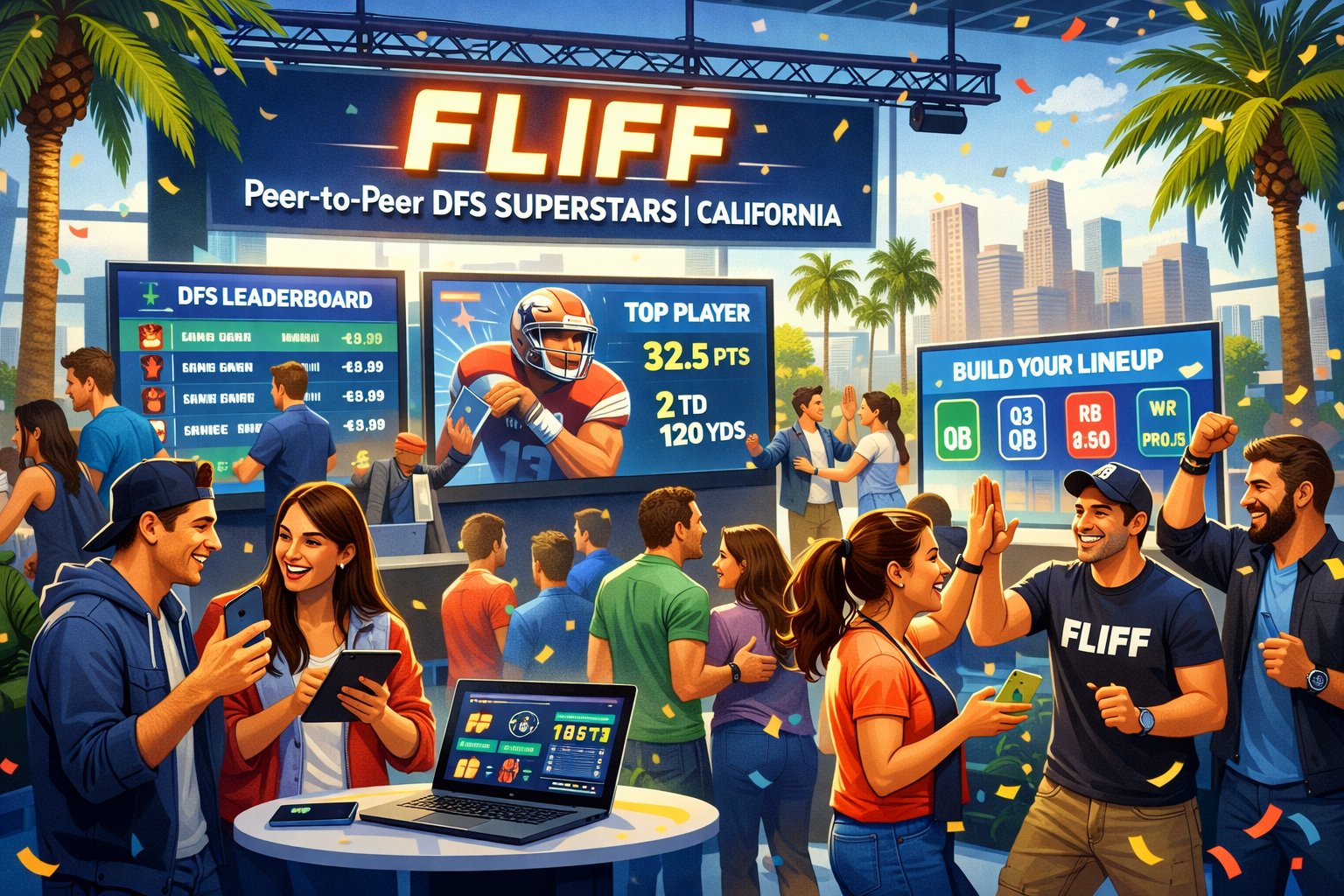
Strategic Timing as Sweepstakes Exit Takes Effect
Fliff launched its new DFS product at a critical moment. The company introduced this real-money offering on the exact day California’s sweepstakes gaming ban went into effect.
This timing was not accidental. The ban removed Fliff’s ability to operate its social sportsbook model in what had been one of its biggest markets. By switching to a peer-to-peer DFS format, Fliff found a way to keep serving California users with real-money contests.
Key timing factors:
- Ban effective date: January 1, 2026
- DFS product launch: January 1, 2026
- Format change: Sweepstakes to peer-to-peer contests
The move mirrors what other operators have done in California. While the attorney general has raised concerns about peer-to-peer DFS, multiple companies continue offering this format to California players.
Diverging Strategies in a Contracting U.S. Market
Sweepstakes operators are adopting different approaches to survive as the U.S. market continues to shrink. Each company is choosing its own path to stay competitive and legally compliant.
Some operators are expanding into social gaming. Others are looking at adjacent verticals like prediction markets, which face their own legal challenges. Fliff has chosen to stay focused on sports gaming by launching its peer-to-peer DFS product.
The company’s Superstars platform serves two purposes:
- It expands Fliff’s product offerings beyond sweepstakes
- It provides a defensive position in markets with increasing legal pressure
This dual-purpose strategy places Fliff alongside other operators who believe peer-to-peer DFS can survive legal scrutiny. The model faces questions in California and other states, but companies continue to invest in it.
Different operators are taking these approaches:
| Strategy | Example Operators | Focus Area |
|---|---|---|
| Social gaming expansion | VGW | Casino-style games |
| Adjacent verticals | MyPrize | Prediction markets |
| Peer-to-peer DFS | Fliff, Underdog, PrizePicks | Sports contests |
The launch of Superstars shows how operators must balance growth with risk management. California represents the largest player market in the country, which makes it too valuable to abandon. Yet the state’s attorney general has declared both traditional DFS and peer-to-peer formats potentially illegal.
Operators are betting that peer-to-peer contests will prove more defensible than pick’em formats. Whether this bet pays off remains uncertain as legal challenges continue to mount across multiple states.